
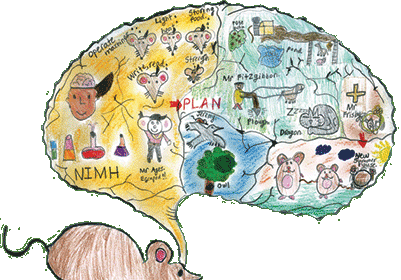
Animal testing, also known as animal experimentation or animal research is the use of non-human animals in experiments.
Types of Testing
Animal testing can be performed for different reasons. It may be to observe natural behaviors, such as a mouse running a maze or field studies. It may also include pure research such as genetics, developmental biology, behavioral studies, drug testing. Animals are also used for education, breeding, and defense research. Supporters of the use of animals in experiments, such as the British Royal Society, argue that virtually every medical achievement in the 20th century relied on the use of animals in some way.
Testing Rooms
Research is conducted inside universities, medical schools, pharmaceutical companies, farms, defense establishments, and commercial facilities. Scientists usually perform the testing. Special buildings are built to allow animal testing to be performed.
Cosmetic Testing

Cosmetics testing is a well known use for animal testing. Thousands of animals are killed throughout the world for experiments. Several cosmetics are commonly tested on mice, rats, rabbits and guineapigs. This includes skin and eye irritation tests where chemicals are rubbed on shaved skin or dripped into the eyes without any pai
n relief. Laundry detergents are also tested on animals. Many companies want to know how their product will work on human skin and to be sure they test it on unsuspecting, innocent animals.
There are three R’s to stop and prevent animal testing which are replace, reduce and refine. Over 100 million animals are being poisoned in science laboratories every year for chemicals we use today!
The earliest references to animal testing are found in the writings of the Greeks in the 2nd and 4th century. Stop testing products on animals. Testing kills our wildlife and nature. Are rats and mice really that harmful to you!!!!
Reference: http://en.wikipedia.org/wiki/Animal_testing
Mice
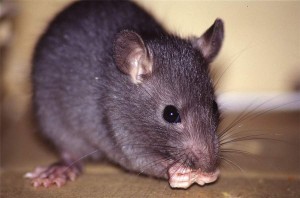
Mice are small mammals which belong to the order of rodents. A mammal is a covered in fur gives birth to live babies and feeds their babies with milk.
Life Cycle
Female mice can give birth when they are two months old and are able to have babies 6-10 times per year. Mice have to build their homes near sources of food because they like to eat 15-20 times per day.
Mice can live in a lab for 2 years but usually they will live in the wild for five months because of predators like snakes, cats and foxes. House mice, like other rodents don’t vomit. Deer mice get their name because of their fur it looks like a lot of deer fur.
Habitat
Mice are most commonly found in grasslands, bushy country, cliff forests, pasture lands and farmlands.
Diet
House mice mainly feed on plants but they will also eat meat and dairy products. They will drink water but require very little of it. They will eat their own droppings to acquire nutrients produced by bacteria in their guts!
Rats
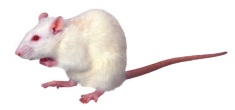
Rats are mammals. They are medium-sized, long-tailed rodents belonging to the superfamily Muroidia. Rodents are known by a single pair of continuously growing incisors (sharp teeth) in each of the upper and lower jaws which must be kept short by by gnawing and chewing constantly.“True rats” are members of the genus Rattus.
Behaviour
Specially bred rats have been kept as pets at least since the late 19th century. Pet rats behave differently from wild rats depending on how many generations they have been kept as pets. Many members of other rodents families are also referred to as rats, and share many characteristics with true rats.
Size
Rats are typically distinguished from mice by their size; rats are generally large muroid rodents, while mice are generally small muroid rodents. The muroid family is very large and complex, and the common terms rat and mouse are not taxonomically specific. Generally, when someone discovers a large muroid, its common name includes the term rat, while if it is small, the name includes the term mouse. Scientifically, the terms are not confined to members of the Rattus and Mus genera, for example, the pack rat and cotton mouse.
Habitat
Rats live in attics, yards, forests, caves, grassy places, roofs, burrows, trees and they basically live anywhere they want. Most rats live in attics and caves. They prefer to live in roofs so they can steel food.
Rats are more interesting than you think they are. Rats are also sooooo cute!
Reference: http://en.wikipedia.org/wiki/Rat
Interviews
Trouble loading?
Click here to watch this video on School Tube
Trouble loading?
Click here to watch this video on School Tube
Trouble loading?
Click here to watch this video on School Tube
Where to now?
Back to: NIMH
Back to: Dragon
Go to: The Cave
Back to the StoryWorld Web